This is Part 1 in a series about Aerial Lineman. You can find a link to Part 2 at the bottom of this page.
When you first hear the term “aerial lineman,” it is easy to only think about those people who scale power poles and are dealing directly with electricity. However, it is important to point out that the telecommunications aerial lineman, plays a vital role in keeping the United States connected.
Both types of lineman work at heights to install, repair, and maintain overhead utilities. This guide breaks down what each type does, how they train, what challenges they face, and why this is a strong career path.
We will tackle this subject by defining the roles of electrical and telecommunications aerial lineman to give a better explanation of what each type of lineman does.
The Traditional Aerial Lineman
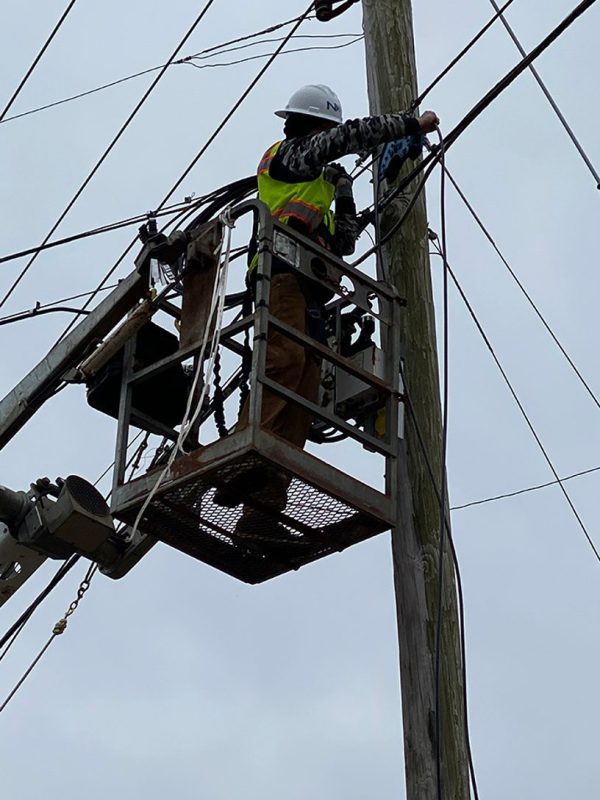
The traditional aerial lineman — also called a power or electrical lineman, builds, maintains, and repairs overhead electrical systems. This includes power lines, poles, transformers, and related equipment.
Installation and Maintenance: Aerial lineman install and maintain power lines, ensuring they are in optimal working condition. They are responsible for repairing damaged power lines, replacing faulty equipment, and conducting routine inspections to identify potential issues.
Power Restoration: When storms or emergencies knock out power, linemen are often the first on the scene. They work quickly to find and fix faults so communities can get power back.
Line Inspections: Regular inspections of power lines are necessary to ensure their safety and efficiency. Aerial lineman inspect lines for wear, damage, or signs of environmental stress and take proactive measures to address any issues.
Teamwork: Lineman frequently work in teams, coordinating with other professionals such as engineers, supervisors, and ground personnel. They must communicate effectively and work together to execute complex tasks safely and efficiently.
What are the Key Responsibilities of Electrical Lineman?
Line Construction: Aerial lineman are involved in the initial construction of electrical power systems. They install and string power lines, usually using specialized equipment like bucket trucks or climbing poles, to connect various electrical components.
Maintenance and Repairs: Linemen regularly inspect power lines and equipment to identify any signs of damage or wear. They are responsible for repairing or replacing faulty components, such as insulators, conductors, transformers, and connectors. This work often involves working at heights and in adverse weather conditions.
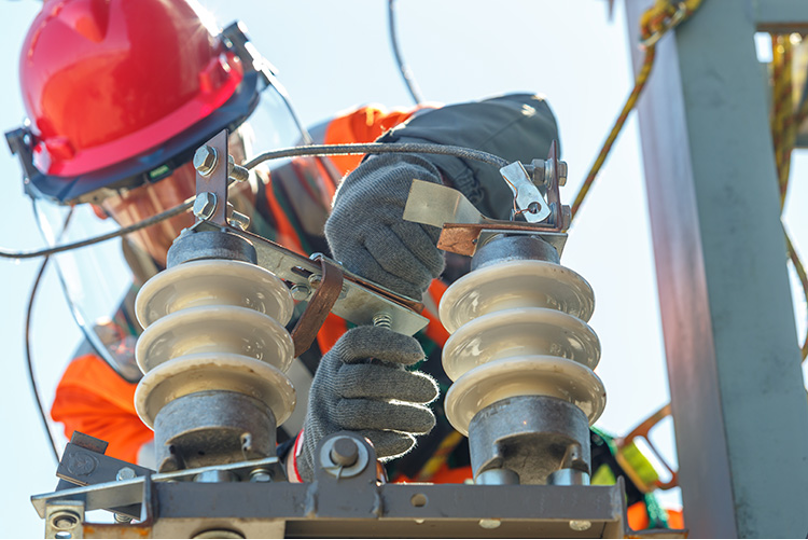
Power Outage Restoration: When power outages occur, aerial lineman play a crucial role in restoring electrical service. They locate and fix faults in the power lines, often working under pressure and in emergency situations to minimize downtime and ensure the safety of the public.
Safety Procedures: Safety is paramount in the work of aerial lineman. They adhere to strict safety protocols and use personal protective equipment (PPE) to mitigate risks associated with working at heights and with high-voltage electricity.
Collaboration: Linemen often work in teams and collaborate with other professionals, such as engineers, supervisors, and other linemen. They may also coordinate with other utility companies, like those in telecommunications, or emergency response teams during emergencies or joint projects.
Training and Skill Development: Aerial lineman continuously update their skills and knowledge to adapt to evolving technologies and industry standards. They may participate in training programs and workshops to enhance their abilities in areas such as electrical systems, safety procedures, and specialized equipment operation.
Overall, aerial lineman play a vital role in ensuring reliable electricity distribution by constructing, maintaining, and repairing overhead power systems while prioritizing safety and efficient service restoration.
Aerial Lineman Training and Education
Becoming an aerial lineman requires comprehensive training and education. While the specific requirements may vary, the typical path to becoming an aerial lineman includes obtaining a high school diploma or equivalent.
Although not mandatory, courses in mathematics, physics, and electrical systems provide a strong foundation.
Apprenticeship Programs: Aerial lineman often enter formal apprenticeship programs offered by utility companies, trade associations, or unions. These programs combine classroom instruction with hands-on training, covering subjects such as electrical theory, safety practices, climbing techniques, and equipment operation.
Certifications: Upon completing their apprenticeship, linemen may pursue certifications to enhance their skills and credibility. Organizations like the Electrical Lineworker Operations and Training Program (ELTOP) and the National Center for Construction Education and Research (NCCER) offer industry-recognized certifications.
Challenges of the Job
Working as an aerial lineman presents several challenges that require a unique set of skills and qualities:
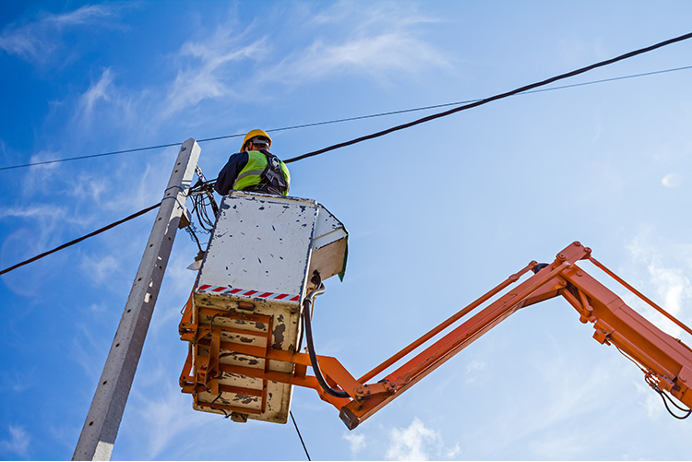
Physical Demands: Aerial linemen work at great heights, often in challenging weather conditions. They must possess excellent balance, agility, and strength to maneuver and climb utility poles while carrying heavy equipment.
Risk Management: The profession entails inherent risks, such as electrical hazards, falls, and extreme weather. Aerial lineman must adhere to strict safety protocols, use personal protective equipment, and continuously assess and mitigate risks to ensure their well-being.
Problem Solving: Every job site brings new challenges. Linemen must think quickly, troubleshoot issues, and adapt on the fly.
The Telecommunications Aerial Lineman
A newer and fast-growing type of aerial lineman works in the communications industry. As the demand for fiber, wireless, and broadband networks has grown, so has the need for these skilled professionals.
Telecommunications aerial lineman are responsible for ensuring the reliable transmission and distribution of communication signals. These skilled individuals play a vital role in establishing, maintaining, and expanding the networks that keep us connected.
The Growing Demand for Communication Infrastructure
With the rapid growth of mobile devices, the Internet of Things (IoT), and the increasing reliance on cloud-based services, the demand for robust communication infrastructure has skyrocketed. Aerial lineman have stepped in to meet this demand, working tirelessly to build and maintain the networks that support our interconnected world.
How They Differ From Electrical Linemen
While aerial lineman in the communications industry share some similarities with their counterparts in the power sector, there are significant differences in their focus and expertise. Communication lineman specialize in installing and maintaining fiber optic cables, coaxial cables, and other communication lines, often working at great heights to establish connectivity between cell towers, data centers, and other network components.
- Fiber optic cables
- Coaxial cables
- Communication lines between cell towers, data centers, and network equipment
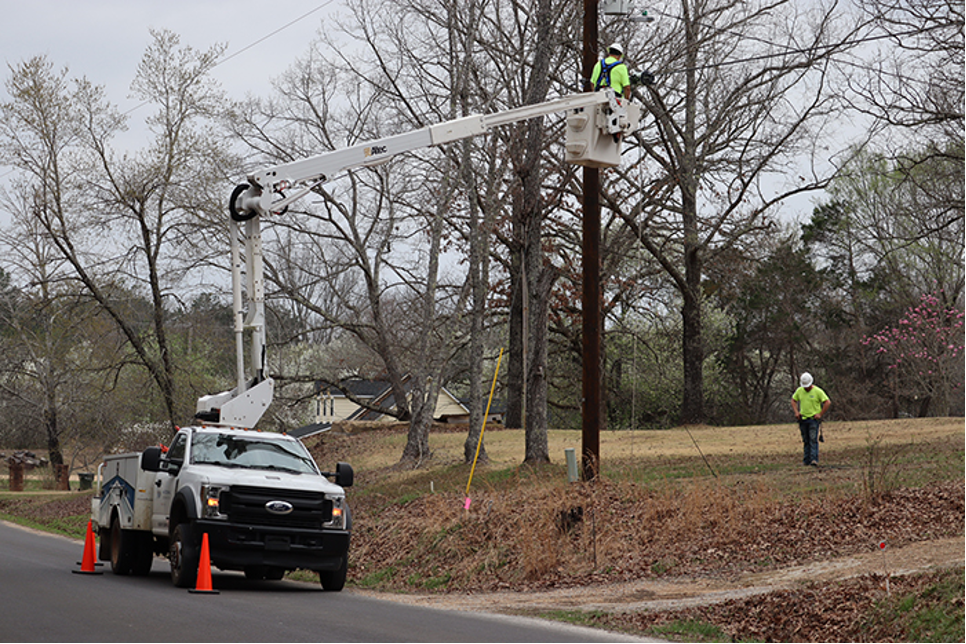
Building and Expanding Communication Networks: Aerial lineman in the communications industry are responsible for the construction and expansion of communication networks. They work with a range of equipment, such as bucket trucks and specialized climbing gear, to install and string communication lines between utility poles, rooftops, and other structures.
Their expertise in working at heights and dealing with sensitive cables ensures the efficient and reliable transmission of voice, data, and video signals.
Maintenance and Repair: Like their counterparts in the power industry, communication linemen play a crucial role in the maintenance and repair of communication infrastructure. They conduct regular inspections, identify faults or damage, and perform necessary repairs to keep the network functioning optimally.
This proactive approach helps minimize downtime and ensure uninterrupted connectivity for businesses and individuals.
Technological Advancements and Skill Development: As the communication industry evolves, aerial lineman in this field must keep pace with technological advancements. They receive specialized training in handling fiber optic cables, understanding signal transmission, and using advanced testing equipment.
They continuously develop their skills to stay updated on emerging technologies and industry standards, ensuring they can meet the evolving demands of the communications landscape.

Ensuring Safety and Compliance: Safety remains a paramount concern for aerial lineman in the communications industry. They adhere to strict safety protocols, use appropriate personal protective equipment (PPE), and follow industry standards and regulations.
Due to the sensitive nature of fiber optic cables and the potential risks associated with working at heights, safety training and compliance are critical aspects of their work.
Why Aerial Lineman Is a Great Career
Despite the challenges, a career as an aerial lineman offers numerous rewards:
Job Security: As long as electricity and communication networks exist, there will be a need for skilled aerial lineman. The demand for qualified professionals remains steady, providing job security and stability.
Competitive Compensation: Linemen receive competitive wages, often with additional compensation for overtime, emergency work, and hazardous conditions. The nature of the work also provides opportunities for career progression and higher pay grades.
Pride and Fulfillment: Aerial lineman take pride in their work as they play an essential role in providing reliable services to communities. They contribute to public safety, economic growth, and the overall well-being of society.
Continual Learning: The field of aerial line work is constantly evolving, with new technologies and techniques emerging. This dynamic environment offers linemen the chance to learn and adapt, fostering professional growth and intellectual stimulation.
Aerial lineman are the unsung heroes who ensure the seamless transmission of electricity and communication signals. Their demanding work requires physical strength, technical expertise, and a commitment to safety. As a career, aerial lineman work offers job security, competitive compensation, and a sense of fulfillment derived from serving the community.
With the world increasingly reliant on power and communication, the importance of aerial lineman cannot be overstated, making it an excellent career choice for those seeking excitement, challenge, and the opportunity to make a difference.
Conclusion: The emergence of aerial lineman in the communications industry has revolutionized the way we connect and communicate. These highly skilled professionals build, maintain, and repair the infrastructure that forms the backbone of our interconnected world.
As technology continues to advance and the demand for seamless communication grows, the role of aerial lineman in the communications industry will remain indispensable, ensuring that we stay connected from above.
Why Choose National OnDemand?
Although there are many companies out there to work for, few compare to National OnDemand with regard to the opportunities provided to new linemen. National prides itself on being willing to bring on people with little to no experience in the field and turn them into cutting edge professionals in the telecommunications industry.
- Company vehicle with fuel card
- Medical, dental, and vision insurance
- Production bonuses
- Paid training and certifications
- A clear path for career advancement
Additionally, National has a wide range of benefits provided to their employees, including a company vehicle and fuel card, insurance, production bonuses, and more.
You’ll need a strong work ethic, a desire to work with your hands, and the ability to complete some of the basic physical responsibilities listed previously.
National OnDemand also welcomes seasoned professionals to join us as an aerial lineman. Although we do accept and train professionals with no previous experience, we also offer training programs to experienced linemen as well, making the transition to National as smooth as possible.
We invest into our employees by paying for all training to create a long-lasting relationship and career path for hardworking individuals. See all our openings for jobs like Aerial Lineman at www.NationalOnDemand.com/careers
If you are interested in being an aerial lineman, visit our careers page or check out the tab on the right side of the screen to learn how to become a part of our team.
National OnDemand, Inc. prides itself on always maintaining high standards and prioritizing safety on every construction project. Join our network of talented professionals and set yourself up for a long and successful career!
Click here for Part 2 in the series of blogs about Aerial Lineman
Aerial Lineman FAQ
Q: What does an aerial lineman do?
An aerial lineman installs, maintains, and repairs overhead utilities. In the power industry, that means working with electrical lines, poles, and transformers. In telecommunications, aerial linemen install and maintain fiber optic cables, coaxial cables, and communication lines between cell towers, data centers, and network equipment. Both types work at heights using equipment like bucket trucks and climbing gear.
Q: How much does an aerial lineman make?
Aerial linemen receive competitive wages, with additional pay for overtime, emergency work, and hazardous conditions. Pay increases with experience, certifications, and advancement into supervisory or management roles. At National OnDemand, linemen also receive production bonuses, giving them the ability to increase their income based on output. Visit nationalondemand.com/careers for current openings and compensation details.
Q: Do you need experience to become an aerial lineman?
No experience is required at National OnDemand. The company prides itself on hiring people with little to no experience and turning them into skilled telecommunications professionals. All training is paid for by National OnDemand. Experienced linemen are also welcome and receive additional training programs to make the transition as smooth as possible.
Q: Is aerial lineman a physically demanding job?
Yes. Aerial linemen work at great heights, often in challenging weather conditions. The job requires strength, balance, and agility to climb utility poles and maneuver while carrying heavy equipment. Linemen must also follow strict safety protocols and use personal protective equipment at all times to manage the risks associated with working at elevation.
Q: What is the difference between an electrical lineman and a telecommunications lineman?
Both types work at heights and use similar equipment, but their focus is different. Electrical linemen work with power lines, transformers, and high-voltage systems to keep communities powered. Telecommunications aerial linemen specialize in fiber optic cables, coaxial cables, and communication lines that support internet, phone, and data services. The telecommunications side is a fast-growing field driven by fiber and broadband expansion across the country.
Q: What is the job outlook for aerial linemen?
The job outlook is strong. As long as electricity and communication networks exist, skilled aerial linemen will be needed. The rapid expansion of fiber optic networks, 5G infrastructure, and federal broadband investment is driving significant demand for telecommunications aerial linemen in particular. This growth is expected to create steady work opportunities for years to come.
Q: What benefits do aerial linemen receive at National OnDemand?
At National OnDemand, aerial linemen receive a company vehicle with a fuel card, medical, dental, and vision insurance, production bonuses, paid training and certifications, and a clear path for career advancement. National OnDemand invests in its employees by covering all training costs, creating a long-term career path for hardworking individuals.


